Educational Workshops

Learn how your finances actually work

Each workshop is a focused, in-depth guide to one aspect of personal finance as it applies to families in Mexico.

Building a Monthly Budget

The mechanics of tracking income and expenses in a Mexican household context.
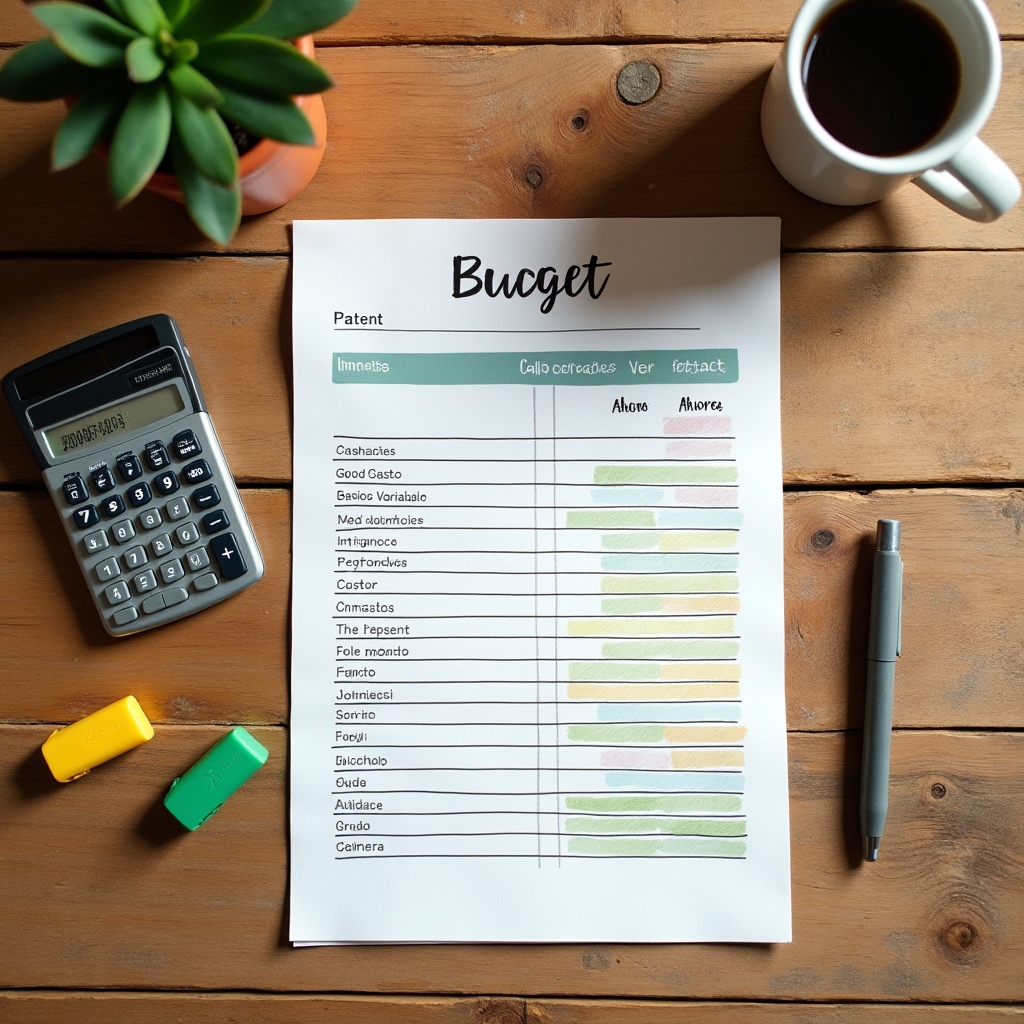
Overhead view of a hand-written budget worksheet on a wooden desk with colored pens and a calculator

Why budgeting works differently in Mexico

Many Mexican households have income that isn't perfectly consistent month to month. Seasonal work, self-employment, informal income alongside formal employment. A budget framework built for a fixed monthly salary often doesn't translate well to this reality.

This workshop covers how to categorize income by reliability (fixed vs variable), how to set a baseline budget using your lowest predictable monthly income, and how to allocate variable income when it arrives. We also explain the "sobre" (envelope) method adapted to digital tracking, and how to handle the irregular expense spikes that come with Mexican calendar events.

Fixed vs variable income categorization
The envelope method adapted for Mexican households
Handling annual expense spikes (December, August, Easter)
Zero-based budgeting basics
Tracking tools and approaches


Afore and Voluntary Savings: What's the Difference?

Two retirement-related concepts that are frequently confused, explained from the inside out.

Two documents side by side showing AFORE account statement and voluntary savings plan
Retirement Foundational

Understanding Your AFORE

Your AFORE account is a mandatory retirement savings vehicle regulated by CONSAR (Comisión Nacional del Sistema de Ahorro para el Retiro). Three parties contribute to it: you, your employer, and the Mexican government. The percentages are set by law and vary by salary level.

How to find which AFORE holds your account
The three-party contribution structure
How investment decisions are made within your AFORE
When and how you can access your funds
Glass jar filled with coins on a wooden table next to a small notebook with savings notes
Savings Foundational

Voluntary Savings Explained

Voluntary savings (ahorro voluntario) are contributions you choose to make on top of your mandatory AFORE contributions. They can be made through your AFORE administrator or through separate savings vehicles. The rules about when you can withdraw them differ significantly from mandatory contributions.

Short-term vs long-term voluntary savings
Tax implications of voluntary AFORE contributions
Other savings vehicles beyond AFORE
Withdrawal rules and conditions

Using a Credit Card Correctly

What the statement actually tells you, what CAT means, and how revolving balances accumulate.

Reading a Mexican credit card statement

A Mexican tarjeta de crédito statement contains legally required disclosures that most cardholders never read. The CAT (Costo Anual Total), the minimum payment, the interest rate applied to revolving balances, and the projection of how long it takes to pay off the balance at minimum payment — all of these appear on every statement by law.

This workshop walks through each section of a typical statement, explains what each number means, and describes the mechanics of how interest accrues on unpaid balances. We also explain the difference between the "fecha de corte" (billing cycle close) and the "fecha límite de pago" (payment due date), and why the gap between them matters.

CAT: what it includes and how to use it
Fecha de corte vs fecha límite de pago
How revolving interest accumulates
Minimum payment: what it covers and what it doesn't
Close-up of hands holding a credit card next to a notebook with financial notes

Planning School Expenses

How to anticipate and spread the cost of back-to-school season across the full year.

Parent and child organizing school supplies and receipts on a kitchen table

The August problem and how to solve it

In Mexico, the start of the school year concentrates a significant amount of household spending into a single month. Uniforms, shoes, school supplies, enrollment fees (colegiaturas), and extracurricular activity fees can all arrive simultaneously in late July and August. For families without a plan, this creates real financial strain.

This workshop explains how to build a school expense inventory, estimate costs by category, and create a savings plan that distributes the financial load across January through July. We also cover how to identify which expenses are fixed (enrollment) versus which have flexibility (supply lists), and how to handle mid-year expenses like school trips and events.

Building a school expense inventory
Fixed vs flexible school costs
A monthly savings plan for August
Handling mid-year school events
Multiple children: coordinating costs
Learn more

Understand our educational approach

Every workshop is built on the same principles: explain how things work, use Mexico-specific context, and never recommend specific products or providers.

Our Commitment
Contact

Suggest a topic

Is there a financial topic relevant to your family that we haven't covered? We read every message and consider topic suggestions when planning new content.

Contact Us